
Geodatensatz

Natural Radionuclides in Groundwater (NORM)

Beschreibung

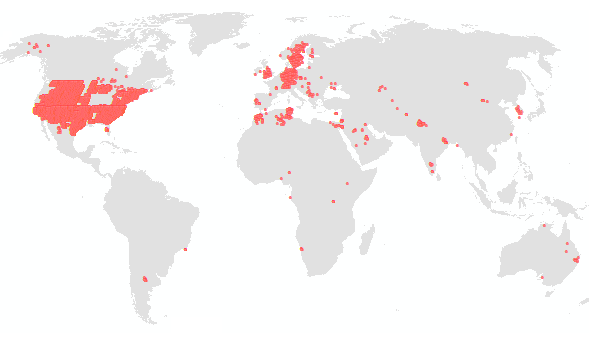
Considering water as the primary resource necessary for social life, agriculture, industry, and wealth, the importance of groundwater investigation is clear. Apart from many other pollutants, this work focusses on geogenic uranium (U) and radium (Ra), which both stand for natural radionuclides (NORM) that need to be considered frame of groundwater exploration and monitoring programmes due to their specific mobility and chemo-/radiotoxicity. As investigation of U and – to a lesser extent - Ra is done by an increasing number of scientific working groups, the global dataset is improving continuously. In order to give a summarized overview on available and recent literature, scientific papers, reports, and governmental documents have been reviewed for U-238 mass concentrations and Ra-226 and Ra-228 activity concentrations and collected in tables and global maps. Further natural isotopes of U and Ra have been rarely subject of investigation. The collected data were evaluated and interpreted in frame of an associated scientific publication (see citation). From the available data it can be concluded that high geogenic U occur mainly under oxidizing conditions and carbonate rich groundwater, which might be seen as indicator for elevated U concentrations. Certain geological formations, as for example sedimentary, granitic, and volcanic host rocks, promote high U concentrations in groundwater. For geogenic Ra, the search for definite indications proved difficult, since less clear correlation is given for any observed factor. In a global perspective, the most promising evidence for elevated Ra are highly reducing redox conditions, as well as the occurrence of Fe/Mn mineral phases. Furthermore, barite represents a sink for Ra due to its ability to incorporate Ra isotopes. Dissolution of those mineral phases eventually results in co-dissolution of Ra, when Ra is found in host rocks of investigated aquifers, or downstream of such groundwater reservoirs. Furthermore, cation exchange might enhance Ra mobility process, especially in case of sedimentary aquifers with low sorption capacity and/or aquifers with high salinity. Given those chemical requirements for the occurrence of U and Ra, a negative correlation between mother and daughter nuclide can be established. When knowledge on present geological and geochemical constraints is available, elevated U and Ra concentrations might be predictable, as long as anthropogenic influence is excluded.

Aktualität des Datensatzes

Publikation 01.02.21
Letzte Änderung 22.02.23

Raumbezug

Lage der Geodaten (in WGS84)

SW Länge/Breite NO Länge/Breite
-180°/-90° 180°/90°

Koordinatensystem

Verweise und Downloads

Downloads (1)

NORM im Format ESRI Shape
[6MB]

Querverweise (1)

Geodatendienst
WMS
Natural Radionuclides in Groundwater (NORM) (WMS) Considering water as the primary resource necessary for social life, agriculture, industry, and wealth, the importance of groundwater investigation is clear. Apart from many other pollutants, this work focusses on geogenic uranium (U) and radium (Ra), which both stand for natural radionuclides (NORM) that need to be considered frame of groundwater exploration and monitoring programmes due to their specific mobility and chemo-/radiotoxicity. As investigation of U and – to a lesser extent - Ra is done by an increasing number of scientific working groups, the global dataset is improving continuously. In order to give a summarized overview on available and recent literature, scientific papers, reports, and governmental documents have been reviewed for U-238 mass concentrations and Ra-226 and Ra-228 activity concentrations and collected in tables and global maps. Further natural isotopes of U and Ra have been rarely subject of investigation. The collected data were evaluated and interpreted in frame of an associated scientific publication (see citation). From the available data it can be concluded that high geogenic U occur mainly under oxidizing conditions and carbonate rich groundwater, which might be seen as indicator for elevated U concentrations. Certain geological formations, as for example sedimentary, granitic, and volcanic host rocks, promote high U concentrations in groundwater. For geogenic Ra, the search for definite indications proved difficult, since less clear correlation is given for any observed factor. In a global perspective, the most promising evidence for elevated Ra are highly reducing redox conditions, as well as the occurrence of Fe/Mn mineral phases. Furthermore, barite represents a sink for Ra due to its ability to incorporate Ra isotopes. Dissolution of those mineral phases eventually results in co-dissolution of Ra, when Ra is found in host rocks of investigated aquifers, or downstream of such groundwater reservoirs. Furthermore, cation exchange might enhance Ra mobility process, especially in case of sedimentary aquifers with low sorption capacity and/or aquifers with high salinity. Given those chemical requirements for the occurrence of U and Ra, a negative correlation between mother and daughter nuclide can be established. When knowledge on present geological and geochemical constraints is available, elevated U and Ra concentrations might be predictable, as long as anthropogenic influence is excluded.
Vorschau

Weitere Verweise (3)

information
Internetseite zum Projekt
information
Internetseite zum Projekt

Nutzung

Nutzungsbedingungen

Allgemeine Geschäftsbedingungen (AGB) der Bundesanstalt für Geowissenschaften und Rohstoffe (BGR). Bei Software, digitalen Daten und sonstigen urheberrechtlich geschützten Werken sowie Know-how ist das LBEG bzw. die BGR Inhaber der Verwertungsrechte. Der Vertragspartner erhält ein einfaches Nutzungsrecht für die im Folgenden beschriebenen Nutzungsarten. Übertragen wird das Recht zur Vervielfältigung und Vorführung. Nicht übertragen wird insbesondere das Recht der öffentlichen Zugänglichmachung, es sei denn der Vertragspartner nimmt die öffentliche Zugänglichmachung als beteiligte Behörde eines Verwaltungsverfahrens für Zwecke des Verwaltungsverfahrens vor. Die bereitgestellten Informationen sind bei Weiterverwendung wie folgt zu zitieren: Datenquelle: NORM v2.0 (C) BGR 2023

Zugriffsbeschränkungen

Es gelten keine Zugriffsbeschränkungen

Kontakt

Ansprechpartner

Bundesanstalt für Geowissenschaften und Rohstoffe Dr. Frank Wagner DE

Fachinformationen

Informationen zum Datensatz

Identifikator 817b3578-7740-dd50-6034-4301af53a3d8
Digitale Repräsentation Vector
Fachliche Grundlage EN: Source of the measured values: International publications DE: Quelle der Messwerte: Internationale Fachpublikationen Frank Wagner, Elena Mühr-Ebert, Fabian Köhler, Clemens Walther (2021): Occurrence and spread of geogenic uranium and radium levels in groundwater. Applied Geochemistry (submitted).

Zusatzinformationen

Sprache des Datensatzes Englisch

Datenformat

Name Version Kompressionstechnik Spezifikation
Shapefile n/a

Schlagworte

INSPIRE-Themen

Geologie
Geology

GEMET-Concepts

Groundwater
Grundwasser
Hydrogeologie
Hydrogeology

ISO-Themenkategorien

geoscientificInformation

Suchbegriffe

Geogene Hintergrundwerte
Grundwasserbeschaffenheit
NORM
Radium
Uran
Weltweit
worldwide

Informationen zum Metadatensatz

Objekt-ID numis-metadaten-c91d501f-d935-42bd-b99c-e89dd96e62ac
Aktualität der Metadaten 23.02.23
Sprache Metadatensatz Englisch
XML Darstellung Metadaten als XML herunterladen
Ansprechpartner (Metadatum) geodatenmanagement@bgr.de